

Cookies
Our website uses cookies to make your browsing experience better. When continuing your browsing, your agreement with our policy of using them is considered. For more information, see our Cookie Policy.




Brazil is a continental-sized country, where the Amazon Rainforest, the Atlantic Forest, Caatinga, Wetlands, Rio Grande do Sul’s Pampas, and a gigantic sea cost, distributed through over 3.5 million square kilometers.
Over 20% of the total number of species in the planet are estimated to live and multiply in Brazilian biodiversity. That’s why the country is regarded as the nation with the world’s biggest biodiversity.
Instead of searching abroad for new health solutions, Cristália decided to focus its research efforts on Brazilian biodiversity. And this was just how our Active Pharmaceutical Input (API) collagenase was born.
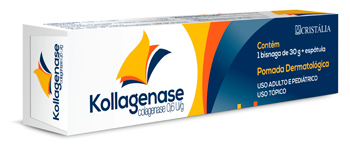
The product generated by that API is Kollagenase ointment, which is indicated to treat skin injuries by promoting smooth and fast cleaning, without bleeding or pain.
From carnivorous to vegetarian
Traditionally, collagenase is an enzyme produced when a bacterium called Clostridium histolyticum needs to decompose collagen, present in animal-source elements, to feed upon it.
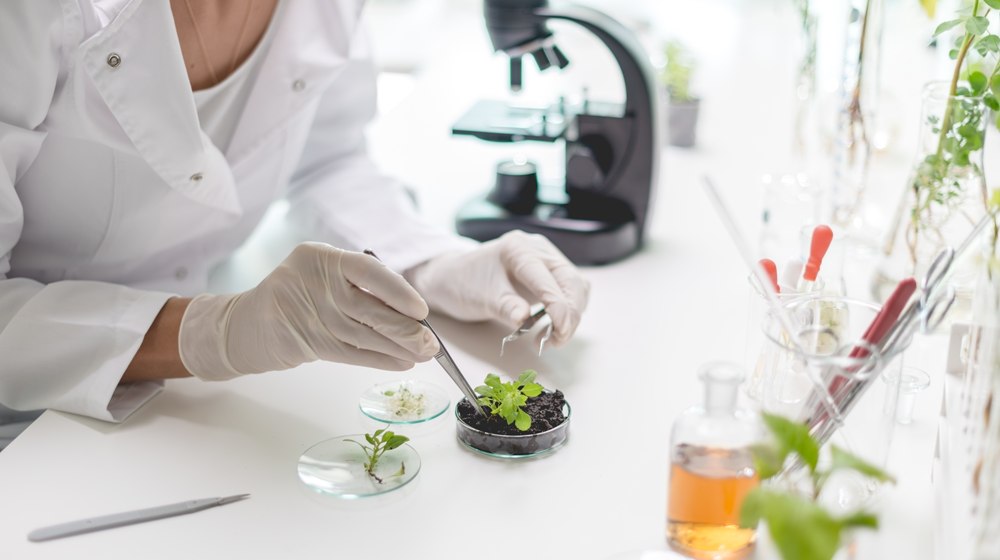
By researching for the presence of a Clostridium histolyticum strain on Brazilian soil, Cristália scientists discovered and collected a slightly different strain at Espírito Santo do Pinhal, a city in the countryside of São Paulo state. They mimicked the presence of collagen in a vegetable culture medium, as if it was indeed present. So, they “misled” the bacteria, leading it to produce collagenase without any collagen present. This is how Cristália’s animal-free collagenase was developed.
Local technology & purity
The idea of producing something free of animal components comes from a number of issues. Most importantly, the development of a purer, more active animal component-free input, meaning that an animal-free collagenase could be employed for isolating stem cells and in Cell Therapy, which require high levels of purity, once these are foreign enzymes that come into contact with organic cells.
Additionally, as a result of this accomplishment, for the first time in history, Brazil has been able to export biotechnology, giving up for good the need to import collagenase.
Approved!
For being an animal-free substance, the input has been approved for fast-track review, since regulatory authorities including ANVISA, FDA, and EMA value the use of technologies free of animal components, because they do not require a number of proofs and tests in highly complex, and therefore time-consuming procedures.
Collagenase is an enzyme produced by a bacterium called Clostridium histolyticum, which needs to decompose collagen, present in animal-source elements, to feed upon it.
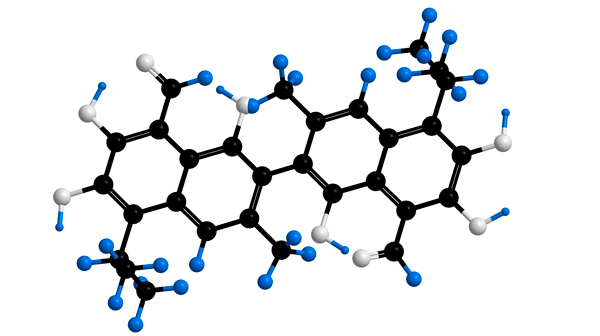
With a animal component-free active pharmaceutical input thanks to the work of scientists, a raw material was developed that could be used not only as an ointment for skin injuries, but for isolating stem cells and Cell Therapies, which require as much purity as possible, because these are foreign enzymes coming into contact with organic cells.
 SAC
SAC